Episkopi in the Paphos region: a sheer cliff, the Ezousa Valley, and hidden places
Episkopi is a small village in the Paphos region, about 11–12 km from Paphos city. It lies in the Ezousa River valley and is best known for the huge sheer Episkopi Rock, nature trails, and places associated with Saint Hilarion.
The village’s main feature is the combination of unusual geology, a green river valley, old religious monuments, and an almost non-touristic atmosphere.
- Episkopi sheer cliff
- Saint Hilarion and the hermit’s cave
- Ezousa Valley
- Best routes and walks
- Environmental Information Centre
- What to see nearby
- Rare birds and nature
- What is important to know
- Frequently asked questions

Episkopi sheer cliff
The village’s main attraction is the huge limestone Episkopi Rock, which is sometimes called the “Meteora of Paphos” or the “Meteora of Cyprus”.
This is one of the most prominent monoliths in the Republic of Cyprus:
- height — about 70 m;
- length — about 250 m;
- the cliff dominates the entire Ezousa Valley;
- the site is part of protected natural landscapes.
The cliff offers views of the Ezousa Valley, the surrounding hills, and the Troodos Mountains.
It is especially beautiful here:
- at sunset;
- in spring after the rains;
- in winter and early spring, when the valley remains green.
Saint Hilarion and the hermit’s cave
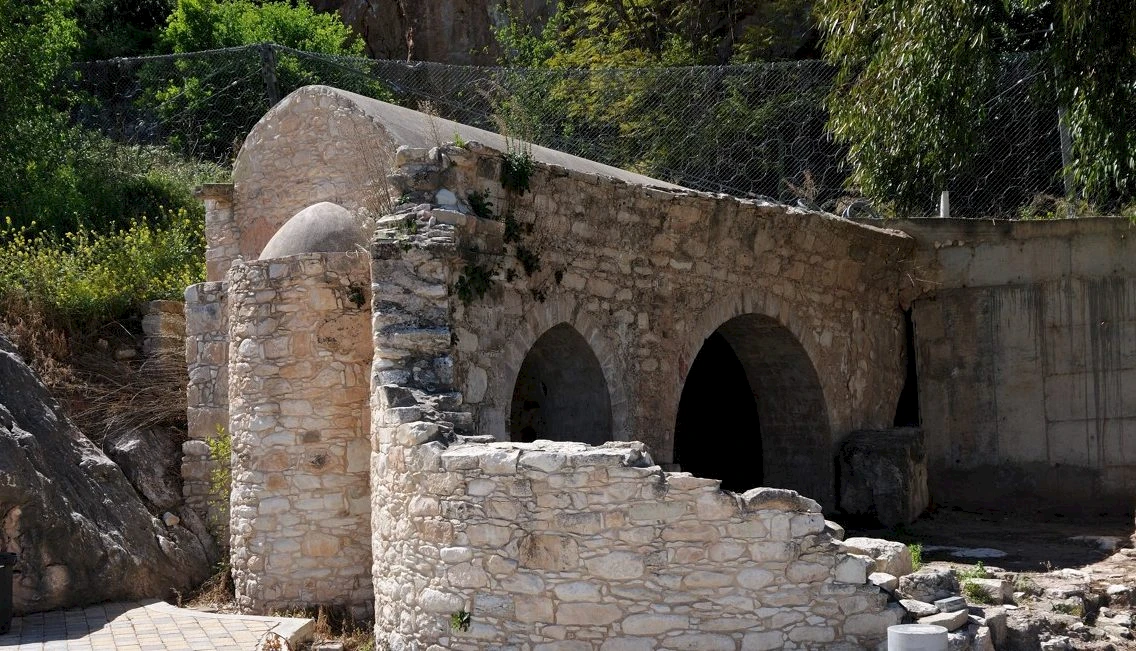
Episkopi Rock is closely linked to Saint Hilarion the Great — one of the well-known early Christian hermits.
According to local tradition, he spent the last years of his life here.
Nearby are:
- the Church of Saint Hilarion;
- the hermit’s cave / cell;
- old religious buildings below the cliff.
The old stone church below the cliff dates to the late Byzantine period. Inside, one can sometimes see icons and candles left by pilgrims.

Ezousa Valley
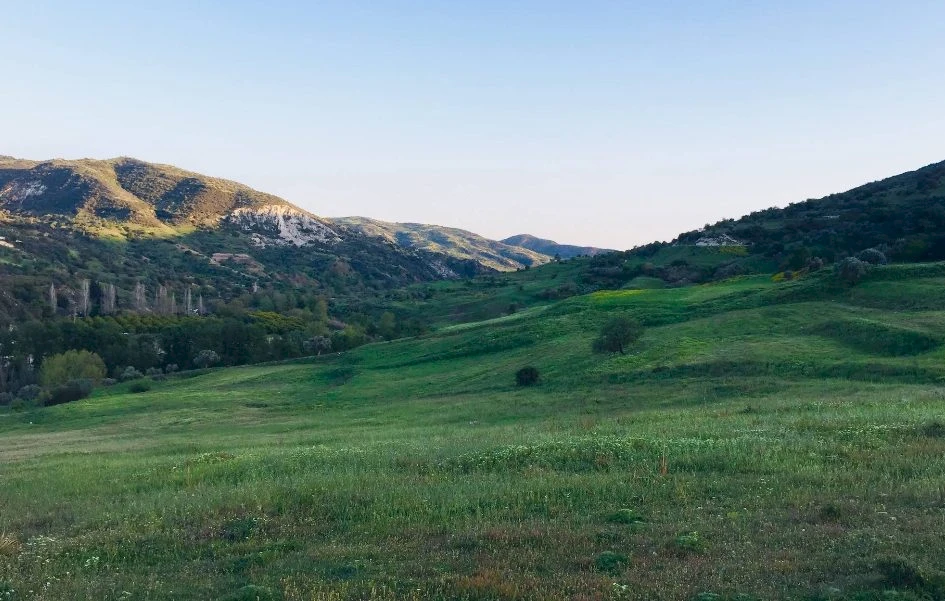
Episkopi is located in the Ezousa River valley, one of the greenest river valleys in the Paphos region.
The river starts in the Troodos Mountains and passes through several villages, including:
The valley is home to:
- plane trees;
- alder;
- citrus trees;
- rocky gorges;
- limestone cliffs.
Part of the valley is included in Natura 2000 as an area of high ecological value.
Best routes and walks
Ezousa Walking Trail
The main route in the area starts at the Episkopi Environmental Information Centre.
- length — about 7.6 km;
- type — circular route;
- difficulty — medium;
- main points — Episkopi Rock, Ezousa Valley, old water mills.
Route from Episkopi to Kallepeia
A linear nature trail between Episkopi and the village of Kallepeia.
Along the way you will find:
- vineyards;
- views of the valley;
- old rural roads;
- abandoned buildings.
Route to Moro Nero
One of the most unusual routes in the area.
Moro Nero is an abandoned village that was left after the earthquake and the intercommunal conflicts of the 20th century.
There you can see:
- house ruins;
- the old Church of Saint Gennadius;
- remains of rural architecture;
- old stone walls and terraces.
Environmental Information Centre
Episkopi Environmental Information Centre is the main information centre for the Ezousa Valley.
There is a small botanical garden nearby and the starting point for several nature trails.
At the centre you can learn about:
- the area’s geology;
- rare plants;
- the birds of the Ezousa Valley;
- nature trails.
This is the best place to start your walk in the area.
What to see nearby
| Place | What is interesting |
|---|---|
| Tsada | Mountain village and views of Paphos |
| Kallepeia | Vineyards and rural routes |
| Minthis area | Monastery and nature trails |
| Ezousa Valley | River valley and nature trails |

Rare birds and nature
Episkopi Rock and the Ezousa Valley are considered an important natural area.
Here you may encounter:
- peregrine falcons;
- other birds of prey;
- rare plants growing in rock crevices;
- typical vegetation of the valleys of the Paphos region.
The area is of interest for:
- birdwatching;
- photography;
- peaceful walks;
- geology;
- nature observation.
What is important to know
- Do not confuse Episkopi in the Paphos region with Episkopi near Limassol.
- In summer, it can be very hot in the valley.
- The best time for walks is spring and autumn.
- Comfortable shoes are needed for the routes.
- Some trails run near cliffs and rocky sections.
- For a trip to the villages and nature routes of the Paphos region, it is more convenient to rent a car: you can compare options via Localrent, Discover Cars, Economy Bookings, or Auto Europe.
Frequently asked questions
Where is Episkopi Rock located?
The cliff is located by the village of Episkopi in the Paphos region, about 11–12 km from Paphos city.
Why is the cliff called the “Meteora of Cyprus”?
Because of the huge sheer monolith and the nearby Church of Saint Hilarion.
Can you climb the cliff?
Some routes pass near the cliff, but on certain sections you need to be careful because of drops and rocky terrain.
What is interesting nearby besides the cliff?
Ezousa Valley, nature trails, the abandoned village of Moro Nero, the Church of Saint Hilarion, and the Environmental Information Centre.
When is the best time to go?
The best time is spring, autumn, and cool winter days.
Author

I am a person who is not afraid to change life when my heart tells me that something greater lies ahead. I am originally from Belarus. I have journeyed from pedagogical and economic education to the financial sector and many years of work in logistics — a world where everything moves, changes,…
You may also be interested in:
- Dragon’s Cave in Pomos: the dragon’s cave in northwestern Cyprus
- Troodos Ophiolite: Cyprus’s Main Geological Landmark
- Cyprus Perfumery Theme Park: the history of ancient perfumery in the Republic of Cyprus
- Polis and Latchi: the sea, villages, Akamas, and wineries of the northwest of the Republic of Cyprus
- Michelin Keys hotels in the Republic of Cyprus: which hotels received Michelin keys
Comments